Roof Repair vs Roof Replacement: Choosing the Best Option for Your Home
When your roof starts leaking or shingles start curling, you are faced with a big choice: roof repair vs roof replacement. It is a decision that affects your budget, your home’s safety, and your long term peace of mind. Choosing the right option and the right contractor, such as Worthy Construction can mean the difference between a quick fix that saves money and a costly mistake that has to be redone later.
In this guide, you will learn exactly how to decide between roof repair or replacement, how to recognize when to replace a roof, what each option costs, and how your roof’s age, materials, and damage level all play into the final decision.
Roof Repair vs Roof Replacement: The Core Difference
Before you can choose, you need to clearly understand what each option actually involves.
What Is Roof Repair?
Roof repair focuses on fixing specific problem areas while keeping most of the existing roof intact. It typically includes:
- Replacing a limited number of damaged or missing shingles
- Repairing flashing around chimneys, vents, and skylights
- Sealing minor leaks
- Fixing small sections of underlayment
- Addressing localized damage from wind, branches, or animals
Think of roof repair as a targeted solution. It is ideal when the rest of your roof is still structurally sound and within its expected lifespan.
What Is Roof Replacement?
Roof replacement is a complete overhaul of your roofing system. It usually includes:
- Removing all existing shingles or roofing material
- Inspecting and potentially replacing roof decking (sheathing)
- Installing new underlayment, flashing, and drip edge
- Installing entirely new roofing material (shingles, metal panels, tiles, etc.)
- Bringing the roof up to current building codes and ventilation standards
If your roof is old, badly damaged, or constantly causing problems, then roof replacement might be the smarter and more cost effective long term solution.
Key Factors That Decide Roof Repair vs Roof Replacement
When you are deciding on roof repair or replacement, you should evaluate the situation using a few crucial factors.
1. Roof Age
Age is one of the most important signals in the debate of roof repair vs roof replacement.
Approximate lifespans:
- Asphalt shingles: 15 to 30 years
- Architectural asphalt shingles: 25 to 35 years
- Metal roofing: 40 to 70 years
- Tile roofing: 50+ years
- Wood shakes: 20 to 40 years
If your roof is near the upper end of its expected roof lifespan and you are seeing problems, that is a strong sign that it may be time to replace the roof, not just repair it.
General rule:
- Roof under 10 years old with isolated issues: Repair is usually enough.
- Roof 10 to 20 years old with moderate issues: It depends on condition and maintenance.
- Roof at or beyond its typical lifespan: Strongly consider replacement.
2. Extent of Damage
The amount of damage matters as much as the type.
Ask:
- Is the damage limited to a small area or spread across multiple roof sections
- Are only shingles affected, or is there damage to the decking underneath
- Are there signs of water intrusion inside the home
A commonly used guideline:
- If less than 20 to 25 percent of the roof is damaged, roof repair may be enough.
- If more than 30 percent is damaged or looks aged and worn, roof replacement becomes more cost effective.
3. Type and Location of Leaks
Not all leaks are equal.
- Minor flashing leaks around chimneys or vents can often be fixed with simple roof repairs.
- Valley leaks (where two roof planes meet) may indicate more serious water flow issues.
- Multiple leaks in different areas usually suggest widespread failing materials, which may indicate when to replace a roof rather than keep patching.
If leaks are recurring or moving to different areas over time, your roof is likely reaching the end of its useful life.
4. Structural Issues
If there is sagging, soft spots, or visible dip lines in your roof, repairs may not be enough. Structural issues can indicate:
- Long term water damage to the decking
- Rotting of rafters or trusses
- Excessive weight from multiple roofing layers
In those situations, full roof replacement is almost always the safer and more responsible choice.
5. Energy Efficiency and Comfort
An old or failing roof often has:
- Poor insulation
- Inefficient ventilation
- Gaps that allow heat or conditioned air to escape
A new roof can improve energy efficiency through:
- Better underlayment
- Improved ventilation systems (ridge vents, soffit vents)
- Lighter, more reflective shingles that reduce heat absorption
If you are struggling with high energy bills and hot or cold spots in the home, it may be more beneficial to choose roof replacement instead of endless repairs.
6. Insurance and Storm Damage
If your roof was damaged by hail, wind, or a fallen tree, your homeowners insurance may help pay for part of the cost.
- If the roof was already very old, insurance may push for replacement rather than repair.
- If the roof was fairly new and the damage is limited, they may cover repairs.
Understanding what your policy covers can tilt the decision toward roof repair or replacement.
When Roof Repair Is The Smart Choice
There are plenty of situations where roof repair is the best and most financially responsible answer.
You should lean toward repair if:
- Your roof is relatively new and still within its expected lifespan
- Damage is limited to one small section, like around a vent pipe or one side of the house
- You have one minor leak that has not caused widespread interior damage
- The majority of the shingles are still lying flat and not cracked or missing
- You are dealing with isolated storm damage such as a small number of missing shingles
Examples Where Repair Makes Sense
- A windstorm blows off some shingles on one slope, but the rest of the roof is in good shape.
- A small leak appears near the chimney due to worn flashing, but your roof is only 8 years old.
- A tree branch scrapes a few shingles, but there is no underlying structural damage.
In each of these cases, a targeted roof repair can restore protection without the cost of a full replacement.
When To Replace A Roof Instead Of Repairing It
If you are wondering when to replace a roof, you are not alone. Many homeowners delay too long and end up with more damage inside the home.
Here are strong signs that it is time for roof replacement rather than yet another repair:
1. Your Roof Is At Or Past Its Lifespan
If your roof is:
- An asphalt shingle roof that is 20 to 25+ years old, or
- Any roofing system that is clearly past its typical life expectancy
then roof replacement is usually the wise call.
2. Widespread Shingle Damage
Look for:
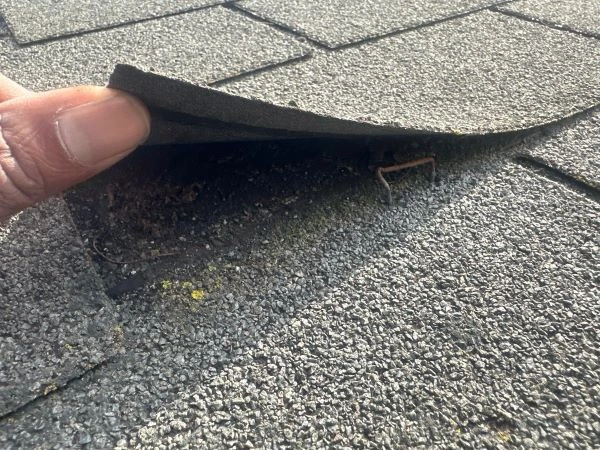
- Curling or cupping shingles
- Granule loss, leaving shingles bald or with exposed asphalt
- Many cracked, broken, or missing shingles
- Shingles that look faded and worn across large areas
This type of widespread wear indicates the material is breaking down across the roof, not just one area.
3. Recurring Leaks
If you have had:
- Several leaks over a few years
- Repairs that seem to fix a problem temporarily, but new leaks appear later
- Water stains in different rooms or on different parts of the ceiling
then your roofing system may be failing on a larger scale. Instead of constantly choosing roof repair vs roof replacement, it may simply be time to replace the roof and eliminate the ongoing risk.
4. Visible Sagging Or Structural Issues
If part of your roof looks like it is:
- Sagging in the middle
- Dipping between rafters
- Soft or spongy when walked on
this can indicate serious structural damage. In these cases, simply repairing shingles is not enough. You need a professional to assess and likely perform a full roof replacement, including decking and structural repairs.
5. Extensive Storm Damage
If a major storm has caused:
- Large sections of missing shingles
- Punctures from flying debris
- Damage across multiple slopes
- Significant hail bruising on a wide area
then roof replacement is often more cost effective than patching large sections.
Roof Repair Or Replacement: Cost Considerations
Money always plays a major role in the decision between roof repair vs roof replacement.
Cost Of Roof Repair
Roof repairs are generally:
- Lower upfront cost
- Focused on a limited area
- Faster to complete, often in a single day
However, repeated repairs can add up. If you are repairing your roof every year or two, the total cost over time may exceed the cost of a full roof replacement.
Cost Of Roof Replacement
Roof replacement has:
- Higher upfront cost
- Longer project duration, usually 1 to 3 days for many homes
- Potential additional costs if there is decking damage or code upgrades needed
But it also:
- Resets the clock on your roof’s lifespan
- Reduces the risk of future leaks
- Can improve energy efficiency and home value
- May come with robust warranties on materials and workmanship
Think In Terms Of Long Term Value
A good way to decide is to ask:
Will this repair extend my roof’s life in a meaningful way, or am I just buying a little time on a failing system?
If you spend a significant amount on repairs for a roof that still needs replacement soon, you are essentially paying twice.
How Roof Material Affects The Decision
Your roofing material plays a big role in when to replace a roof and how often you might need repairs.
Asphalt Shingles
- Most common residential roofing material
- Moderate lifespan
- Repairs are usually easier and cheaper
- Replacement necessary once shingles show widespread curling, cracking, and granule loss
Metal Roofing
- Extremely durable and long lasting
- Resistant to many common issues like hail and wind
- Repairs can be more specialized
- Replacement is typically only needed after decades or serious structural issues
Tile Roofing
- Very long lifespan if properly installed
- Individual tiles can be replaced
- More susceptible to breakage from impact
- Decking and underlayment may need replacement even if tiles look fine
Wood Shakes Or Shingles
- Attractive and traditional appearance
- Require consistent maintenance
- Vulnerable to rot, mold, and insect damage
- Replacement often needed sooner in very wet or humid climates
If your material is nearing the end of its known lifespan and showing large scale wear, the balance shifts toward roof replacement.
Practical Checklist: Roof Repair Vs Roof Replacement
Use this quick checklist to help clarify your choice.
Choose Roof Repair If:
- Your roof is under 10 to 12 years old and still within typical lifespan
- Damage is isolated to a small area or a specific component
- You have one or two minor leaks that have not caused structural damage
- Shingles are mostly flat and intact, with only a few problem spots
- You are dealing with minor storm damage that has not affected a large portion of the roof
Choose Roof Replacement If:
- Your roof is at or near the end of its lifespan
- There is widespread shingle damage across large areas
- You have multiple leaks in different areas over time
- There are signs of sagging, rot, or structural compromise
- You want to improve energy efficiency, add value, or prepare to sell your home
- The cost of frequent repairs is beginning to rival the cost of replacement
Common Myths About Roof Repair And Replacement
Myth 1: You Should Always Repair First And Replace Only As A Last Resort
Reality: Sometimes roof replacement is actually cheaper in the long run. Constant repairs on a failing roof can waste money without solving the underlying problem.
Myth 2: If There Are No Leaks, The Roof Is Fine
Reality: You do not always see problems immediately.
Granule loss, curling shingles, and hidden moisture issues can exist long before a leak shows up inside your home. Ignoring early warning signs can lead to costly damage later.
Myth 3: All Roofs Should Last At Least 30 Years
Reality: Lifespan depends on materials, installation quality, and local weather conditions. A low grade shingle roof in a harsh climate may wear out much sooner.
Myth 4: A New Roof Is Only About Stopping Leaks
Reality: A new roof can also:
- Improve curb appeal
- Increase resale value
- Boost energy efficiency
- Bring your home up to modern building codes
How To Work With A Professional Roofing Contractor
The decision between roof repair vs roof replacement is much easier when you have a qualified expert assessing your roof honestly.
What A Good Roofing Inspection Should Include
- Exterior inspection of all roof planes, valleys, ridges, and edges
- Check of flashing, vents, and penetrations
- Gutter and downspout inspection for granule loss and proper drainage
- Interior inspection of attic for moisture, mold, insulation, and ventilation
- Detailed written report with photos of damage and recommended actions
Questions To Ask Your Roofer
- Do you recommend roof repair or replacement, and why
- What is the estimated remaining lifespan of my current roof
- If I repair, how long should that repair realistically last
- What warranties do you offer on both repairs and replacements
- Are you licensed, insured, and experienced with my roofing material
A trustworthy roofing contractor will not pressure you into a replacement if a repair is clearly sufficient. Likewise, they will not keep patching a roof that is clearly at the end of its life.
FAQs: Roof Repair vs. Roof Replacement
1. How do I know when to replace a roof instead of just repairing it
You should consider replacement when:
- The roof is at or beyond its expected lifespan
- There is widespread damage or many missing or curling shingles
- You have recurring leaks or damage in multiple areas
- There are signs of sagging, rot, or structural issues
In those cases, replacement is usually safer and more economical over time.
2. Is it cheaper to keep repairing my roof instead of paying for a new one
In the short term, yes. In the long term, not always. If you are paying for frequent repairs every year or two, those costs can add up fast. At some point, a new roof becomes the better investment.
3. Can I replace just part of my roof
In some cases you can replace a single section or slope. However, there may be:
- Color and texture mismatches between old and new shingles
- Warranty issues if materials are mixed
- Future problems as the older section continues to age
Partial replacement should be considered carefully with help from a professional.
4. How long does roof replacement usually take
Many typical residential roof replacements take one to three days, depending on:
- Size and complexity of the roof
- Weather conditions
- Number of layers to tear off
- Necessary structural repairs
5. Will a new roof increase my home’s value
Yes, a new roof often:
- Improves curb appeal
- Makes buyers more confident
- Reduces future maintenance risk
Bringing It All Together: What Is Right For Your Home
Choosing between roof repair vs roof replacement does not have to be confusing. Start by looking at:
- Your roof’s age
- The extent and type of damage
- How often you have needed repairs in recent years
- Signs of structural issues
- Your budget and how long you plan to stay in the home
If the issues are minor and your roof is fairly young, roof repair is likely the best choice. If your roof is old, showing widespread wear, or causing repeated problems, then roof replacement is the smarter long term solution. Working with a trusted roofing contractor in Kalamazoo like Worthy Construction can help you clearly understand whether roof repair or replacement is the right move, so you can protect your home, control your costs, and gain the peace of mind that comes with a roof you can truly rely on.





Trustindex verifies that the original source of the review is Google. Khari and his team are incredible. From communication, to competitive pricing on work, Worthy Construction has it covered. I’m loving my brand new windows, and my friends love their new roof! Thank you Worthy ConstructionTrustindex verifies that the original source of the review is Google. Khari was very easy to work with, taking care of my house in a hurry with an active leak. Thanks for a job well done at a great price!Trustindex verifies that the original source of the review is Google. Top notch customer service!! Khari is the best.Trustindex verifies that the original source of the review is Google. Worthy Construction fought and won against my insurance company to get my roof replaced after the tornado and high winds of 2024. The absolute professionalism was impeccable along with the crew and the time it took. I highly recommended Worthy Construction, they are high skilled at what they doTrustindex verifies that the original source of the review is Google. Khari, Worthy construction , and all their employees are the most friendly construction crew we have worked with. After our initial project with our roof and gutters, we couldn’t wait to have his team replace our siding. Worthy Construction was fair, prompt, knowledgeable, efficient, clean and professional. We are very pleased we chose Worthy Construction for our project! Thank you Khari and team.Trustindex verifies that the original source of the review is Google. Khari came on time to inspect and give an estimate. I received the estimate in a timely fashion. It was reasonable. He is very personable and easy to reach. I have had him out for a couple of different things. This company is amazing. His sign is up all over my neighborhood. Thank you!!!!Trustindex verifies that the original source of the review is Google. I used worthy construction very recently when I came home from work and found water damage inside. A neighbor reached out saying how great Mr. Worthy was. I reached out to him and he was able to come over that day and give me an estimate. I went through with his services and the communication was great. I enjoyed the picture evidence of their work along the way and the explanations. There was a break in between all of the winter storms and Mr.Worthy and his team were able to get it done as quick as possible. They were also able to repair the inside ceiling and paint for me. I really appreciated everything they did for me. Everything looks great and would use them again as well as recommend them in a heart beat. Mr. Worthy and his team are top notch.Trustindex verifies that the original source of the review is Google. We are so grateful for the great communication and the prompt, excellent service we received. This company truly cares and we are especially grateful for their support of our military veterans!Trustindex verifies that the original source of the review is Google. Highest praise for all of Worthy Construction. Fantastic service, advice and attention. Full roof installation plus gutters. They kept us informed about everything happening and were done on time. Efficient, quality, professional work. Highly recommended.