
Water Stains on Your Ceiling After It Snows?
You look up on a cold morning and notice brown, ugly rings spreading across your ceiling. It just snowed, the roof is covered, and inside you’re seeing water stains for the first time this winter and your stomach drops. At Worthy Construction, we talk to homeowners all the time who are worried about exactly this situation and want to know whether it is a quick fix or a serious problem hiding above the drywall. Are those water stains on your ceiling after snow just cosmetic, or do they mean there is serious damage hiding above the drywall?
If you are seeing brown ceiling spots in winter, the short truth is this: water stains after snow almost always mean that water is getting where it should never be.
In this guide, you will learn:
- What those brown or yellow ceiling stains really mean
- The most common causes of winter ceiling stains
- How to tell if it is your roof, insulation, ventilation, or plumbing
- What to do immediately to protect your home
- The long-term fixes that actually stop the problem instead of just hiding it with paint
What Those Brown Ceiling Spots After Snow Really Mean
When you see brown or yellow stains on your ceiling, you are not just looking at water. You are looking at:
- Moisture that has seeped through your building materials
- Dust, dirt, and tannins pulled through the drywall
- A clear signal that water has been where it does not belong
Fresh water stains often appear:
- Yellowish or light brown
- With soft, irregular edges
- Sometimes with a darker ring around the outside
Over time, those stains can:
- Grow larger
- Darken in color
- Lead to peeling paint, bubbling, or sagging drywall
When this happens only in winter and specifically after a snowfall, your home is telling you something very specific about your roof and attic.
Why Water Stains Show Up After Snow, Not Just Rain
Several issues can lead to winter ceiling stains. Some are minor. Others are serious. Here are the main culprits.
1. Ice Dams Pushing Water Under Shingles
If you see:
- Thick bands of ice along the roof edge
- Large icicles hanging from gutters
- Cold rooms and uneven temperatures inside
You may have ice dams.
Ice dams form when:
- Heat from inside your home escapes into the attic
- Warm attic air melts the snow on the upper part of the roof
- Meltwater runs down to the colder roof edge, then freezes again
- Over time, this forms a dam of ice near the eaves
Water pools behind that dam and works its way under shingles, then into the roof deck, insulation, and your ceiling. The result is brown ceiling spots in winter along exterior walls or just inside the outside edge of the ceiling.
2. Winter Roof Leaks From Damage Or Aging Shingles
Even without obvious ice dams, your roof may have:
- Cracked or missing shingles
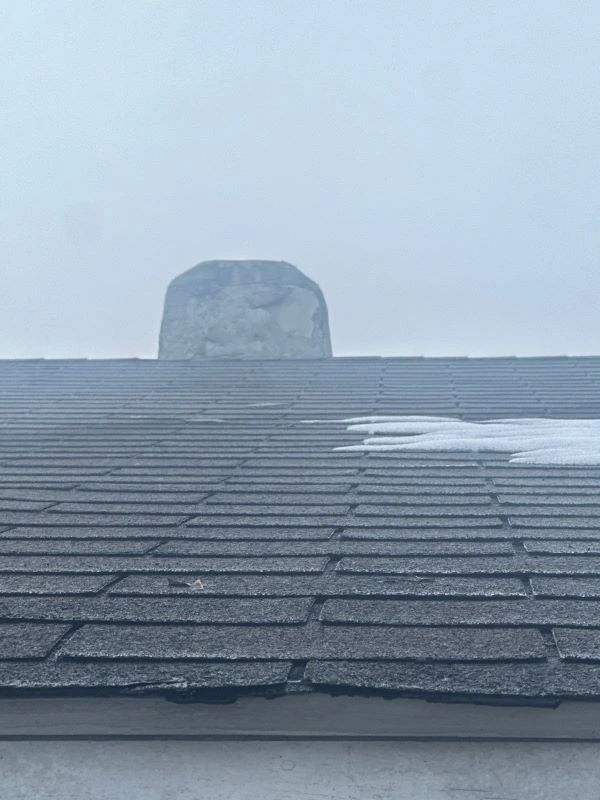
- Failing flashing around chimneys, vents, or skylights
- Nail pops or tiny gaps that water can exploit
During a normal rainstorm, water might drain fast enough that nothing shows up. Under snow load and slow melt conditions, water can linger and find its way through weaknesses.
These leaks often show up as:
- Stains near chimneys or skylights
- Isolated spots rather than a broad band
- Stains that worsen after every snow and thaw cycle
3. Condensation And Attic Moisture Problems
Sometimes the issue is not outside water forcing its way in. Instead, warm, moist indoor air escapes into a cold attic.
When that moist air hits cold surfaces, it:
- Condenses into water droplets
- Freezes as frost or ice crystals on the underside of the roof deck
- Then melts during a warm spell and drips down into insulation and ceilings
Signs of an attic condensation problem include:
- Frost or icy nails in the attic
- A musty smell when you open the attic hatch
- Dark spots on the underside of roof sheathing
- Wet or matted insulation
In this case, attic ventilation, air sealing, and insulation are the key issues.
4. Plumbing Leaks That Only Show Up In Winter
Sometimes it is plumbing, not the roof. For example:
- A leaking bathroom vent or fan duct
- A cracked plumbing vent that runs through the attic
- A pipe fitting that only leaks when water is used more in winter
Plumbing related stains often appear:
- Under bathrooms or kitchens
- Around vent stacks that penetrate the roof
- In very specific, repeated positions
In some homes, both roof issues and plumbing issues can exist at the same time, which is why a thorough inspection is so important.
How To Tell If Your Winter Ceiling Stain Is From The Roof Or Plumbing
You do not need to diagnose everything yourself, but you can gather useful clues.
Look At The Location
Ask yourself:
- Is the stain near an exterior wall or at the ceiling edge?
- This often points toward ice dams, eave leaks, or attic issues.
- Is the stain directly under a bathroom, kitchen, or plumbing fixture?
- This might suggest a plumbing leak.
- Is the stain near a chimney, vent, or skylight?
- This can indicate flashing failure on the roof.
- This can indicate flashing failure on the roof.
Notice The Timing
- Does the stain only appear or worsen after snowfalls and thawing periods?
- That usually points toward snow and ice related roof issues.
- Do you get stains during heavy rainstorms in warmer months as well?
- That can indicate a general roof leak that snow simply makes worse.
- Did the problem start after a recent roof project or home renovation?
- Something might have changed with flashing, ventilation, or insulation.
- Something might have changed with flashing, ventilation, or insulation.
Check The Color And Shape
- Light yellow or brown with a ring usually means older or repeated moisture.
- Darker, spreading patches can indicate ongoing leaks.
- Bulging or sagging drywall is a sign that water is collecting behind the surface.
You do not have to be exact. The goal is to collect observations so that when a professional arrives, they have a clearer picture of what is happening.
Why You Should Never Ignore Water Stains In Winter
It is tempting to think, “The snow will melt, and the problem will go away.” Unfortunately, water stains in winter are rarely harmless.
If you ignore them, you risk:
- Mold growth inside ceilings and wall cavities
- Rot and decay in roof decking and framing lumber
- Damaged insulation that no longer performs
- Peeling paint, crumbling drywall, and discolored ceilings
- Higher future repair bills because small leaks almost never stay small
Even if the stain dries out in spring, the underlying weakness remains. The next winter will bring the same or worse problems.
What To Do Immediately When You Notice A New Water Stain
You do not have to panic, but you should act quickly and calmly.
Step 1: Put Safety First
If you see:
- A bulging or sagging spot in the ceiling
- Water actively dripping
- Water near light fixtures or electrical components
Do this:
- Turn off electricity to the affected area if there is any chance water is near electrical fixtures.
- Place buckets or containers to catch drips.
- Do not poke at the ceiling without understanding where the water is pooled and how heavy it is. In some emergency cases, a controlled small hole can relieve pressure, but this should be done carefully.
Step 2: Document The Damage
Before anything is cleaned up, take:
- Clear photos of the stains from multiple angles
- Photos of the exterior roof and gutters if visible
- Notes about when you first noticed the stain and what the weather was like
This information is useful for:
- Roofing services and insulation professionals
- Possible insurance claims
- Tracking if the stain is growing or changing
Step 3: Avoid Quick Cosmetic Fixes
It is very important not to:
- Just paint over the stain
- Assume it was a one time event
- Use interior stain blocker and call it done
Covering the stain does nothing to solve the cause. Moisture can continue to collect out of sight and create far bigger problems.
Step 4: Call A Professional To Inspect
You want someone who understands:
- Roof systems
- Attic insulation and air sealing
- Ventilation and ice dam behavior
A good inspection will identify whether your problem is:
- Ice dam removal
- Roof leak related
- Condensation and ventilation related
- Plumbing related
- Or a mix of more than one
Long-Term Fixes That Actually Stop Ceiling Stains At The Source
Stopping water stains on your ceiling after snow is not just patchwork. It usually involves a combination of targeted improvements.
Improve Attic Insulation And Air Sealing
Heat rising from your living space into the attic is a key driver of ice dams and condensation. To fix this, a professional may:
- Air seal leaks around light fixtures, fans, plumbing penetrations, and the attic hatch
- Add or upgrade blown in insulation to reach the recommended R value for your climate
- Make sure insulation is even and continuous, not thin at the eaves
When warm air stays where it belongs, snow melts more evenly and your roof surface stays more stable.
Correct Attic Ventilation
Proper ventilation lets cold, dry air move through the attic so that:
- Moisture does not build up and freeze on the roof deck
- The roof deck stays closer to the outdoor temperature
- The chance of ice dams is reduced
This may involve:
- Making sure soffit vents are open and not blocked by insulation
- Ensuring you have the right amount of ridge or roof vents
- Fixing bathroom and kitchen fans that currently vent into the attic instead of outside
Repair Or Upgrade Roofing Components
If shingles, flashings, or underlayment are compromised, your contractor might:
- Replace damaged shingles or sections
- Repair or reinstall flashing around chimneys, vents, and skylights
- Add ice and water shield in vulnerable areas if your roof is being replaced or opened up
A strong, well detailed roof is your first defense. A well insulated, well ventilated attic is your second.
Address Gutter And Drainage Issues
Gutters that are:
- Clogged with debris
- Poorly pitched
- Damaged or undersized
can worsen ice dams and allow meltwater to pool near the roof edge. A thorough winter ready setup includes:
- Clean, properly sloped gutters
- Solid, sealed connections and downspouts
- Proper drainage away from the foundation
When To Call A Professional About Ceiling Stains After Snow
You should contact a professional as soon as you notice:
- A new stain appearing after a snowfall
- A stain that is growing larger or darker
- Multiple stains in different rooms
- Any sign of sagging, crumbling, or soft spots in the ceiling
- A musty smell that suggests hidden mold
The sooner the cause is found, the easier and more affordable the fix usually is.
What A Professional Inspection Typically Includes
A thorough winter leak and stain inspection often involves:
Interior Assessment
- Locating all visible stains and measuring how far they have spread
- Checking for dampness in the ceiling and wall surfaces
- Looking at temperature differences between rooms and levels
Attic Inspection
- Checking the roof deck, rafters, and nails for moisture or stains
- Inspecting insulation depth and condition
- Identifying air leaks from the living space below
- Assessing whether ventilation is adequate and balanced
Exterior Roof And Gutter Check
- Looking for missing, damaged, or aged shingles
- Checking flashing around roof penetrations
- Evaluating ice buildup along eaves and in gutters
- Noting any blocked or damaged gutters and downspouts
Based on these findings, you should receive a clear explanation of:
- What is causing the water stains on your ceiling after snow
- Which repairs and upgrades are essential
- Which items are priorities vs. long term improvements
Preventing Ceiling Stains Before The Next Snowfall
Once you solve the current issue, you can take steps to prevent a repeat next winter.
Schedule Regular Roof And Attic Checkups
Have a qualified professional:
- Inspect the roof and attic before winter
- Check for new gaps, damage, or ventilation issues
- Verify that insulation remains dry and effective
Keep Gutters Clear And Functioning
Before snow arrives:
- Remove leaves and debris
- Make sure downspouts discharge away from the house
- Confirm gutters are not pulling away from the fascia
Monitor The First Few Snowfalls
When the first heavy snow arrives:
- Watch for new stains or damp patches inside
- Look at the roof edges from the ground for unusual ridges of ice
- Catch problems early, before they grow
Frequently Asked Questions About Winter Ceiling Stains
1. Why do I only see water stains in winter and not when it rains?
Snow and ice create long lasting moisture on the roof, combined with melt and refreeze cycles. This allows water to back up under shingles or create condensation in the attic, which may not happen during faster moving rainstorms.
2. Are brown ceiling stains dangerous to my health?
The stain itself is mostly a cosmetic sign, but the moisture behind it can encourage mold growth. Mold can affect indoor air quality and may be a health concern for sensitive individuals. That is why finding and fixing the source of moisture is more important than just hiding the mar
3. Can I just paint over a water stain and forget about it?
You can cover the mark, but the underlying problem will remain. If the source of the leak or condensation is not fixed, water will return and the stain will show through again. In the meantime, hidden moisture can damage insulation and wood.
4. Will my homeowner insurance cover water stains from snow or ice dams?
Coverage varies by policy and by how the damage occurred. Some policies cover sudden and accidental damage from ice dams or storms, while others exclude certain kinds of leaks or long term issues. The best approach is to document the damage and speak with your insurance agent. A professional report can also help.
5. How fast do I need to act when I see a new stain?
The sooner the better. A small stain today can indicate a weakness that turns into a major leak next storm or next season. Quick action means a better chance of a limited repair rather than a full blown restoration project.
Ready To Fix Those Water Stains Before They Get Worse?
If you are seeing water stains on your ceiling after it snows, your home is giving you an early warning. With a smart combination of roof inspection, attic improvements, and targeted repairs from Worthy Construction, you can stop the damage, protect your investment, and go through winter without wondering what is hiding above the ceiling.






Trustindex verifies that the original source of the review is Google. They did a great job and were a good price especially for the quality of work they did. I tried multiple quotes and they fit the bill perfectly. Thank you again got it done quick and looks great I would recommend!Trustindex verifies that the original source of the review is Google. I recently had my roof and gutters replaced by Worthy. The owner, Khari came out to do the quote and was very professional and not at all pushy. The price I paid was comparable to other quotes I had gotten but the quality of the shingles was better (they use Malarkey). Would for sure recommend this company for roof or gutters.Trustindex verifies that the original source of the review is Google. Five stars for quality service on all 4 jobs! Worthy replaced my roof, Gutters this spring Did the flashing on my deck last year And repaired the water damaged ceiling in my garage recently, so it all looks perfect again. Cost was affordable. Questions always answered in a friendly, caring matter. (And we had many questions) I highly recommend this company!Trustindex verifies that the original source of the review is Google. Khari and his team are incredible. From communication, to competitive pricing on work, Worthy Construction has it covered. I’m loving my brand new windows, and my friends love their new roof! Thank you Worthy ConstructionTrustindex verifies that the original source of the review is Google. Khari was very easy to work with, taking care of my house in a hurry with an active leak. Thanks for a job well done at a great price!Trustindex verifies that the original source of the review is Google. Top notch customer service!! Khari is the best.Trustindex verifies that the original source of the review is Google. Worthy Construction fought and won against my insurance company to get my roof replaced after the tornado and high winds of 2024. The absolute professionalism was impeccable along with the crew and the time it took. I highly recommended Worthy Construction, they are high skilled at what they doTrustindex verifies that the original source of the review is Google. Khari, Worthy construction , and all their employees are the most friendly construction crew we have worked with. After our initial project with our roof and gutters, we couldn’t wait to have his team replace our siding. Worthy Construction was fair, prompt, knowledgeable, efficient, clean and professional. We are very pleased we chose Worthy Construction for our project! Thank you Khari and team.Trustindex verifies that the original source of the review is Google. Khari came on time to inspect and give an estimate. I received the estimate in a timely fashion. It was reasonable. He is very personable and easy to reach. I have had him out for a couple of different things. This company is amazing. His sign is up all over my neighborhood. Thank you!!!!